 Add to Chrome
 Add to Firefox
 Add to Edge
Hyperbolic and Evidence-Prioritized Experts for Large Vision-Language Models
May 29, 2026
Large Vision-Language Models (LVLMs) have demonstrated impressive performance on multimodal tasks through scaled architectures and extensive training. Recent studies introduce Mixture of Experts (MoE) into LVLMs for improved computational efficiency. However, existing MoE approaches treat visual and linguistic modalities with symmetric architectures, overlooking the inherent asymmetry in how these two modalities are processed. This asymmetry causes two critical issues. First, text and vision form hierarchical rather than parallel relationships, as text queries typically describe partial aspects of complete visual scenes. Euclidean expert space struggles to encode such containment structures. Second, language experts in deeper layers progressively shift from evidence-based processing to parametric memory dependence, losing grounding in the provided visual and linguistic information. To address these issues, we propose AsyMoE, a novel architecture that explicitly models this asymmetry through three specialized expert groups. Intra-modality experts handle modality-specific processing. Hyperbolic inter-modality experts capture hierarchical cross-modal relationships through negative curvature geometry. Evidence-priority language experts suppress parametric memory activation and maintain contextual grounding throughout network depth. Extensive experiments demonstrate that AsyMoE achieves consistent improvements over baseline methods, with average gains of 1.5\% over MoE variants and up to 3.8\% on hallucination-sensitive tasks. AsyMoE activates 25.45\% fewer parameters compared to dense models.

AutoMCU: Feasibility-First MCU Neural Network Customization via LLM-based Multi-Agent Systems
May 20, 2026Deploying neural networks on microcontroller units (MCUs) is critical for edge intelligence but remains challenging due to tight memory, storage, and computation constraints. Existing approaches, such as model compression and hardware-aware neural architecture search (HW-NAS), often depend on proxy metrics, incur high search cost, and do not fully bridge the gap between architecture design and verified deployment. This paper presents AutoMCU, a feasibility-first large language model (LLM)-based multi-agent system for automated neural network customization under MCU constraints. Given natural-language task requirements and hardware specifications, AutoMCU iteratively generates structured architecture candidates, filters infeasible designs through vendor toolchain feedback before training, evaluates feasible models under a controlled protocol, and verifies deployability through backend-grounded deployment analysis. AutoMCU includes two key mechanisms: 1) hardware-in-the-loop architecture generation for early elimination of undeployable candidates under RAM and Flash constraints, and 2) state-isolated multi-agent scheduling for stable coordination of proposal, training, evaluation, and deployment stages. Experiments on CIFAR-10 and CIFAR-100 under strict MCU constraints show that AutoMCU achieves competitive accuracy while reducing customization time to about 1--2 hours, compared with hundreds of GPU hours for representative MCU-oriented HW-NAS baselines. Comparisons with ColabNAS and the LLM-based NAS method GENIUS on NAS-Bench-201 further demonstrate the effectiveness and stability of AutoMCU. Real-device deployments on multiple STM32 microcontrollers validate its practical applicability to MCU-scale edge intelligence.
A Queueing-Theoretic Framework for Stability Analysis of LLM Inference with KV Cache Memory Constraints
May 06, 2026The rapid adoption of large language models (LLMs) has created significant challenges for efficient inference at scale. Unlike traditional workloads, LLM inference is constrained by both computation and the memory overhead of key-value (KV) caching, which accelerates decoding but quickly exhausts GPU memory. In this paper, we introduce the first queueing-theoretic framework that explicitly incorporates both computation and GPU memory constraints into the analysis of LLM inference. Based on this framework, we derive rigorous stability and instability conditions that determine whether an LLM inference service can sustain incoming demand without unbounded queue growth. This result offers a powerful tool for system deployment, potentially addressing the core challenge of GPU provisioning. By combining an estimated request arrival rate with our derived stable service rate, operators can calculate the necessary cluster size to avoid both costly over-purchasing and performance-violating under-provisioning. We further validate our theoretical predictions through extensive experiments in real GPU production environments. Our results show that the predicted stability conditions are highly accurate, with deviations typically within 10%.
PolarMem: A Training-Free Polarized Latent Graph Memory for Verifiable Multimodal Agents
Jan 31, 2026As multimodal agents evolve from passive observers to long-horizon decision-makers, they require memory systems that provide not just information availability but logical verifiability. A fundamental limitation of current architectures is the epistemic asymmetry inherent in probabilistic vision-language models and dense associative memories: they conflate semantic affinity with factual existence and structurally fail to encode negative constraints. To this end, we introduce PolarMem, a training-free Polarized Latent Graph Memory designed to ground agent reasoning in verifiable evidence. PolarMem transforms fuzzy perceptual likelihoods into discrete logical constraints through non-parametric distributional partitioning. Furthermore, it employs a polarized graph topology with orthogonal inhibitory connections to explicitly store verified negation as a primary cognitive state. At inference time, we enforce a logic-dominant retrieval paradigm, suppressing hallucinatory patterns that violate negative constraints. Extensive evaluation across eight frozen Vision--Language Models and six benchmarks demonstrates that PolarMem functions as a robust cognitive system, establishing a foundation for verifiable multimodal agents. Our code is available at https://github.com/czs-ict/PolarMem.
Theoretically Optimal Attention/FFN Ratios in Disaggregated LLM Serving
Jan 29, 2026Attention-FFN disaggregation (AFD) is an emerging architecture for LLM decoding that separates state-heavy, KV-cache-dominated Attention computation from stateless, compute-intensive FFN computation, connected by per-step communication. While AFD enables independent scaling of memory and compute resources, its performance is highly sensitive to the Attention/FFN provisioning ratio: mis-sizing induces step-level blocking and costly device idle time. We develop a tractable analytical framework for sizing AFD bundles in an $r$A-$1$F topology, where the key difficulty is that Attention-side work is nonstationary-token context grows and requests are continuously replenished with random lengths-while FFN work is stable given the aggregated batch. Using a probabilistic workload model, we derive closed-form rules for the optimal A/F ratio that maximize average throughput per instance across the system. A trace-calibrated AFD simulator validates the theory: across workloads, the theoretical optimal A/F ratio matches the simulation-optimal within 10%, and consistently reduces idle time.
A Universal Load Balancing Principle and Its Application to Large Language Model Serving
Jan 25, 2026Load balancing-the allocation of work across parallel resources to reduce delay, energy and cost-is a pervasive challenge in science and engineering, from large-scale simulation and data processing to cloud and manufacturing operations. Motivated by the emerging bottleneck in large language model (LLM) serving, we study a particularly stringent regime of load balancing that arises in barrier-synchronized, stateful systems: work cannot be freely migrated and progress is gated by the slowest participant at each step, so heterogeneity and temporal drift in workloads create persistent stragglers and substantial idle time. LLM serving under data-parallel decoding provides a prominent modern instance: in production traces, barrier-induced idle can exceed 40% of compute time per decode step. Here we develop a universal load-balancing principle, which admits a step-wise finite-horizon integer-optimization formulation and yields worst-case guarantees: across LLM decode models and a broader class of non-decreasing workload drift processes, it reduces long-run imbalance by a factor that grows with batch size and system scale. Extensive experiments corroborate the theory, showing substantial improvements in throughput and latency together with reductions in energy consumption. These results provide a general, theoretically grounded framework for load balancing, with immediate implications for sustainable LLM serving and broad relevance to other synchronization-gated resource-allocation problems.
ICPO: Illocution-Calibrated Policy Optimization for Multi-Turn Conversation
Jan 20, 2026Large Language Models (LLMs) in multi-turn conversations often suffer from a ``lost-in-conversation'' phenomenon, where they struggle to recover from early incorrect assumptions, particularly when users provide ambiguous initial instructions. We find that standard post-training techniques like Reinforcement Learning with Verifiable Rewards (RLVR) exacerbate this issue by rewarding confident, direct answers, thereby inducing overconfidence and discouraging the model from seeking clarification. To address this, we propose Illocution-Calibrated Policy Optimization (ICPO), a novel training framework that sensitizes the model to instruction ambiguity. ICPO augments the training corpus with underspecified prompts and conditions the reward signal on the user's illocutionary intent, rewarding the model for expressing uncertainty or asking for clarification when faced with ambiguity. Experiments demonstrate that ICPO fosters appropriate humility, yielding a substantial average improvement of 75\% in multi-turn conversation, while preserving robust performance on single-turn benchmarks. Our work presents a practical path toward more robust and collaborative conversational AI that can better navigate the nuances of human interaction.
Adaptively Robust LLM Inference Optimization under Prediction Uncertainty
Aug 20, 2025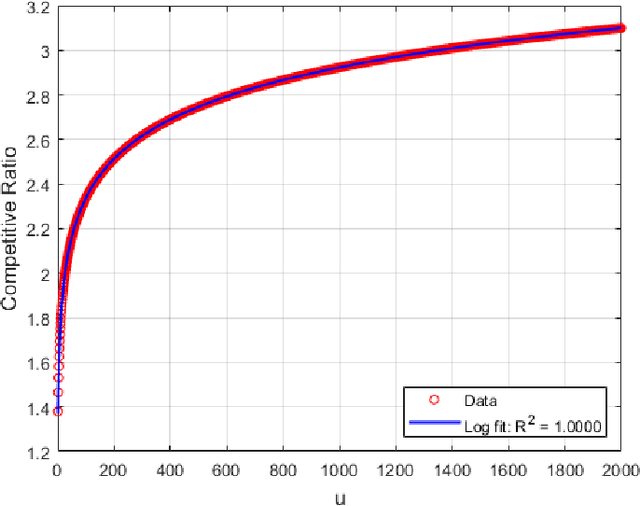
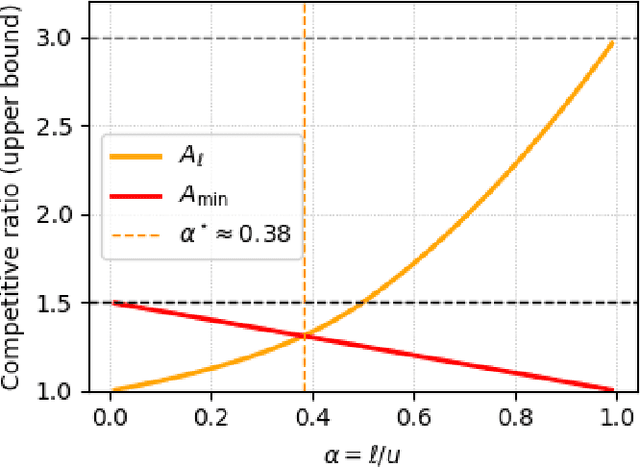
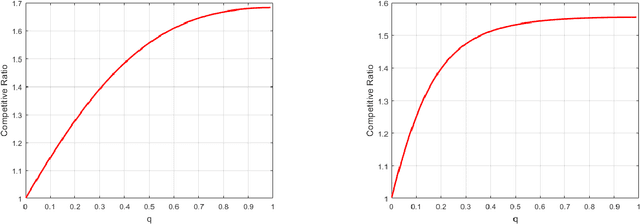
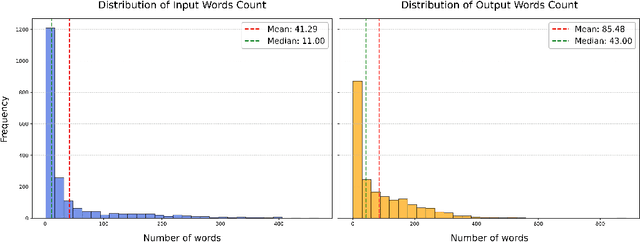
We study the problem of optimizing Large Language Model (LLM) inference scheduling to minimize total latency. LLM inference is an online and multi-task service process and also heavily energy consuming by which a pre-trained LLM processes input requests and generates output tokens sequentially. Therefore, it is vital to improve its scheduling efficiency and reduce the power consumption while a great amount of prompt requests are arriving. A key challenge in LLM inference scheduling is that while the prompt length is known upon arrival, the output length, which critically impacts memory usage and processing time, is unknown. To address this uncertainty, we propose algorithms that leverage machine learning to predict output lengths, assuming the prediction provides an interval classification (min-max range) for each request. We first design a conservative algorithm, $\mathcal{A}_{\max}$, which schedules requests based on the upper bound of predicted output lengths to prevent memory overflow. However, this approach is overly conservative: as prediction accuracy decreases, performance degrades significantly due to potential overestimation. To overcome this limitation, we propose $\mathcal{A}_{\min}$, an adaptive algorithm that initially treats the predicted lower bound as the output length and dynamically refines this estimate during inferencing. We prove that $\mathcal{A}_{\min}$ achieves a log-scale competitive ratio. Through numerical simulations, we demonstrate that $\mathcal{A}_{\min}$ often performs nearly as well as the hindsight scheduler, highlighting both its efficiency and robustness in practical scenarios. Moreover, $\mathcal{A}_{\min}$ relies solely on the lower bound of the prediction interval--an advantageous design choice since upper bounds on output length are typically more challenging to predict accurately.
LLM Serving Optimization with Variable Prefill and Decode Lengths
Aug 08, 2025We study the problem of serving LLM (Large Language Model) requests where each request has heterogeneous prefill and decode lengths. In LLM serving, the prefill length corresponds to the input prompt length, which determines the initial memory usage in the KV cache. The decode length refers to the number of output tokens generated sequentially, with each additional token increasing the KV cache memory usage by one unit. Given a set of n requests, our goal is to schedule and process them to minimize the total completion time. We show that this problem is NP-hard due to the interplay of batching, placement constraints, precedence relationships, and linearly increasing memory usage. We then analyze commonly used scheduling strategies in practice, such as First-Come-First-Serve (FCFS) and Shortest-First (SF), and prove that their competitive ratios scale up sublinearly with the memory limit-a significant drawback in real-world settings where memory demand is large. To address this, we propose a novel algorithm based on a new selection metric that efficiently forms batches over time. We prove that this algorithm achieves a constant competitive ratio. Finally, we develop and evaluate a few algorithm variants inspired by this approach, including dynamic programming variants, local search methods, and an LP-based scheduler, demonstrating through comprehensive simulations that they outperform standard baselines while maintaining computational efficiency.
LRFusionPR: A Polar BEV-Based LiDAR-Radar Fusion Network for Place Recognition
Apr 27, 2025In autonomous driving, place recognition is critical for global localization in GPS-denied environments. LiDAR and radar-based place recognition methods have garnered increasing attention, as LiDAR provides precise ranging, whereas radar excels in adverse weather resilience. However, effectively leveraging LiDAR-radar fusion for place recognition remains challenging. The noisy and sparse nature of radar data limits its potential to further improve recognition accuracy. In addition, heterogeneous radar configurations complicate the development of unified cross-modality fusion frameworks. In this paper, we propose LRFusionPR, which improves recognition accuracy and robustness by fusing LiDAR with either single-chip or scanning radar. Technically, a dual-branch network is proposed to fuse different modalities within the unified polar coordinate bird's eye view (BEV) representation. In the fusion branch, cross-attention is utilized to perform cross-modality feature interactions. The knowledge from the fusion branch is simultaneously transferred to the distillation branch, which takes radar as its only input to further improve the robustness. Ultimately, the descriptors from both branches are concatenated, producing the multimodal global descriptor for place retrieval. Extensive evaluations on multiple datasets demonstrate that our LRFusionPR achieves accurate place recognition, while maintaining robustness under varying weather conditions. Our open-source code will be released at https://github.com/QiZS-BIT/LRFusionPR.